
The Problem
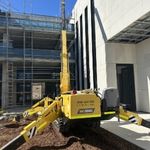
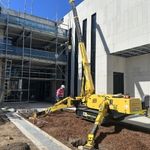
Manteena Group was installing a stone façade to the top floor of an embassy building in O’Malley, ACT. The site had a tight internal courtyard with restricted entry points, no road space for a mobile crane, and no option to carry the panels internally without significant manual handling risk. A standard mobile crane was off the table entirely.
Why It Was Hard
The courtyard footprint ruled out anything with outriggers or a large swing radius. The stone panels were heavy and fragile. Programme couldn’t slip. And the solution needed to be on site fast.
What We Did
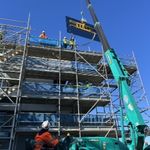
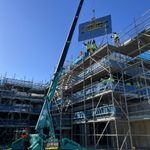
This was actually the second Preston Hire deployment on this site for Manteena. The first was a SuperCrane Maeda MC405C, used to lift and place large glazing panels using a vacuum lifter rig — crew guiding each panel in at height, the SuperCrane MC405C operating within the same constrained courtyard footprint.
When the façade job came up, Manteena called Preston Hire directly. A Maeda MC305C was on site within 4 days of the initial enquiry. Over two weeks, the MC305C lifted stone façade panels directly to the top floor — no road closure, no outrigger footprint, no manual handling risk.
The Result
Two deployments. Two different machines. Zero issues on either job. Glazing installation completed with the MC405C, façade installation completed on programme with the MC305C. Manual handling eliminated on both. No road disruption. Manteena reported smooth operation throughout.
By the second job, Manteena didn’t call around. That’s the measure of whether you delivered the first time. This is the kind of site most crane companies would walk away from — no road closure, no outrigger space, tight programme. Two jobs in, it’s exactly the territory SuperCranes is built for.
This project highlights how mini cranes solve tight access construction challenges where traditional cranes simply cannot operate.


